Outlawed for Getting By: How Zoning Codes Are Weaponized Against the Informal Economies of Color
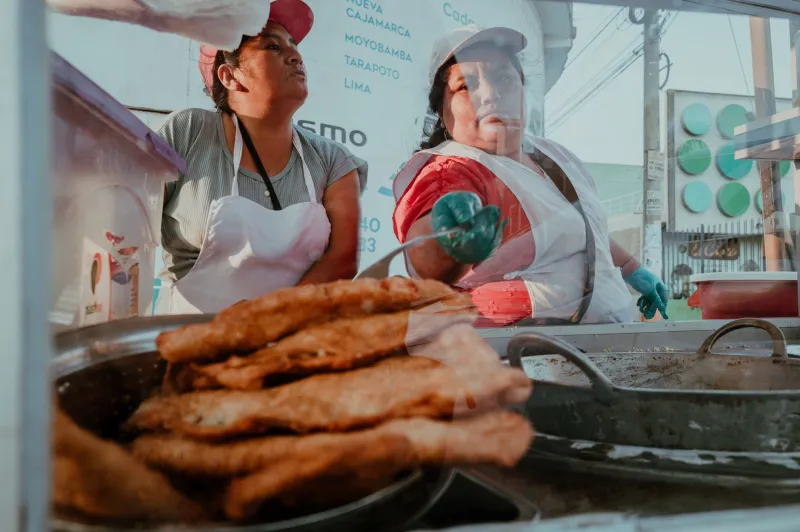
On a Tuesday morning in South Los Angeles, a Salvadoran grandmother named Rosa sets up her tamale cart at the same corner she has occupied for eleven years. Within an hour, a city compliance officer arrives, cites her for operating without a commercial vending permit in a restricted zone, and confiscates her equipment. The fine: $1,000. Her daily earnings: roughly $80. By any honest accounting, the city has not preserved public order. It has destroyed a family's income.
This is not an isolated incident. It is policy — and across the United States, it is disproportionately enforced against Black, Latino, and immigrant communities whose economic survival has long depended on systems that operate outside, or alongside, the formal economy.
The Architecture of Exclusion
American zoning law carries a history it rarely acknowledges in polite company. The earliest municipal zoning codes of the twentieth century were designed, in significant part, to segregate economic activity along racial and class lines — to keep certain kinds of commerce, and certain kinds of people, out of prosperous neighborhoods. That legacy has not been erased. It has been updated.
Today's zoning frameworks in most major American cities prohibit or severely restrict a constellation of activities that low-income households rely upon: sidewalk vending, home-based food preparation and sales, urban agriculture on residential lots, informal childcare networks, and small-scale backyard enterprise. On paper, these restrictions apply universally. In practice, their enforcement is anything but universal.
Research consistently demonstrates that zoning enforcement is concentrated in lower-income neighborhoods of color, where residents are less likely to have legal representation, less likely to know their rights, and far less likely to have the political capital to contest citations. Wealthier, predominantly white neighborhoods that host their own forms of informal commerce — from garage sales to unlicensed Airbnb rentals to backyard chicken coops — face enforcement at a fraction of the rate.
When Survival Is a Zoning Violation
The informal economy is not a symptom of failure. For millions of Americans who face structural exclusion from formal employment — through discrimination, credential barriers, criminal records, immigration status, or disability — it is a rational and often necessary response to a system that has closed its doors.
Urban agriculture offers one of the clearest illustrations. In cities like Detroit, Baltimore, and Chicago, community-led garden projects on vacant lots have transformed food deserts into sources of fresh produce, neighborhood cohesion, and modest supplemental income. Yet many of these projects operate in persistent legal jeopardy. Municipal codes in numerous jurisdictions prohibit the sale of food grown on residential-zoned land, restrict the keeping of chickens or bees, and impose commercial licensing requirements that are financially and bureaucratically inaccessible to individual households.
In Detroit, where decades of disinvestment have left vast swaths of the city without reliable grocery access, Black urban farmers have faced fines and forced removal for growing food that their neighbors depended on. The message embedded in these enforcement actions is unambiguous: the formal food system, which has failed these communities, retains legal primacy over the community systems that have filled its absence.
Street vending tells a parallel story. For immigrant communities in particular, vending represents one of the most accessible paths to self-employment — requiring minimal startup capital, no formal credentials, and the kind of cultural knowledge and culinary tradition that is not recognized by corporate hiring managers but is deeply valued by communities. Yet the majority of American cities have historically treated street vending as a nuisance to be suppressed rather than an economic activity to be supported.
Cities like New York have issued tens of thousands of vending citations annually, with enforcement concentrated in immigrant neighborhoods in the Bronx, Queens, and upper Manhattan. In many cases, the fines accumulate faster than vendors can pay them, generating debt spirals that ultimately force people out of self-employment and into the same exploitative low-wage labor markets they were trying to escape.
The Compliance Catch-22
Advocates working on these issues frequently describe what they call the compliance catch-22: the formal pathways to legal operation are designed in ways that make them effectively inaccessible to the communities most likely to need them.
A licensed commercial kitchen required for home-based food businesses can cost between $15 and $30 per hour to rent in most major cities — far exceeding the margins of a small-scale producer. A street vending permit in cities like Chicago or San Francisco involves multi-year waiting lists, substantial licensing fees, and zoning restrictions that prohibit vending in the highest-traffic areas where income is actually viable. Urban agriculture operations that wish to sell their produce commercially face agricultural zoning classifications that rarely account for the realities of urban land use.
The system, in other words, offers the appearance of a legal pathway while ensuring that pathway remains practically impassable for those without capital, connections, or legal support. This is not bureaucratic inefficiency. It is structural gatekeeping.
Enforcement as Displacement
There is a second dimension to this story that demands attention: the relationship between zoning enforcement and gentrification. In neighborhood after neighborhood across American cities, the aggressive enforcement of restrictions on informal commerce has preceded — or accompanied — processes of displacement and demographic change.
When longtime residents of color are fined for maintaining gardens, operating home businesses, or vending on sidewalks, they face financial pressure that compounds the housing cost pressures already pushing them out. When enforcement creates a legal record, it can affect housing eligibility, public benefits, and employment prospects. The cumulative effect is to make continued residence in a neighborhood more difficult, more expensive, and more precarious — precisely as that neighborhood becomes more attractive to wealthier newcomers.
In this context, zoning enforcement functions not merely as an economic barrier but as a tool of community erasure.
What Genuine Reform Looks Like
A handful of cities have begun to reckon with this reality. California's 2018 Safe Sidewalk Vending Act decriminalized street vending statewide, prohibiting local governments from making vending a criminal offense and limiting the circumstances under which vendors can be cited. Cities like Denver and Portland have invested in simplified permitting pathways for home-based food businesses. Some municipalities have created urban agriculture overlay zones that explicitly permit and protect community growing projects on residential and vacant land.
These are meaningful steps, but they remain exceptions in a national landscape that still treats informal economic activity as inherently suspect — as something to be regulated away rather than supported and integrated.
Restoring fairness in this domain requires cities to undertake an honest audit of who their zoning codes actually serve. It requires replacing punitive enforcement with supportive regulation — low-cost permits, accessible licensing, good-faith compliance assistance rather than immediate citation. It requires recognizing that the informal economy is not a problem to be solved but a community resource to be protected.
Most fundamentally, it requires acknowledging that when a city fines a grandmother for selling tamales to survive, it has not upheld the law. It has chosen, with full deliberation, whose survival is permitted and whose is not.