Darkness on Demand: How Utility Disconnection Policies Have Become Instruments of Poverty Entrenchment
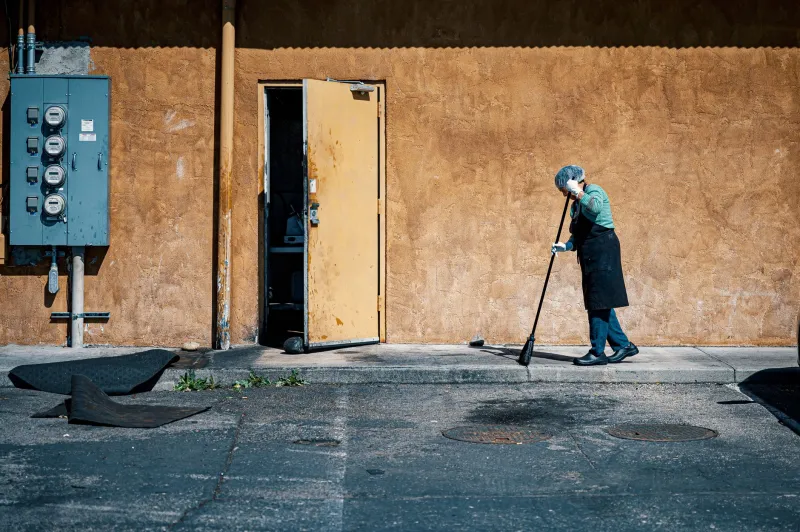
On a February morning in Detroit, a single mother of three returned home from a double shift to find her electricity had been cut. The temperature outside was eleven degrees. Her youngest child, an infant with a respiratory condition, required a humidifier to breathe safely through the night. The utility company had sent a notice — buried in a billing statement that arrived the same week as a car repair bill and a rent increase — and then acted on it within ten days. The reconnection fee alone was $185. She did not have it.
Her story is not an anomaly. It is a policy outcome.
Across the United States, millions of households face utility disconnection each year — not because they are indifferent to their bills, but because they are poor in a system that has constructed no meaningful floor beneath them. Water, electricity, and natural gas, resources without which modern life is functionally impossible, are administered by a patchwork of public utilities and private corporations operating under regulatory frameworks that have historically prioritized revenue recovery over human welfare. The result is a disconnection economy: one that extracts maximum financial penalty from the households least equipped to absorb it.
The Architecture of Extraction
Understanding how disconnection policies function requires confronting an uncomfortable truth: the fee structures surrounding service termination are not incidental to utility revenue — they are, in many cases, central to it. Reconnection fees, late payment penalties, deposit requirements for households with prior disconnections, and interest accrued on past-due balances collectively constitute what consumer advocates have termed a "poverty surcharge" — a hidden tax levied exclusively on those who cannot pay on time.
A 2022 analysis by the National Consumer Law Center found that low-income ratepayers in states with minimal disconnection protections paid, on average, 23 percent more per unit of energy than their higher-income counterparts when total fees and penalties were factored into cost calculations. The meter, in other words, runs differently depending on your zip code and your bank balance.
Utility companies, particularly investor-owned ones, operate under state-granted monopolies that insulate them from competitive pressure. When a household cannot pay, there is no alternative provider to approach. There is only the same company, now demanding a reconnection fee, a security deposit, and full payment of the outstanding balance — frequently before service is restored. For a family already stretched to its limit, this sequence of demands does not resolve a debt crisis. It deepens one.
Who Bears the Burden
The geography of disconnection is not random. Research consistently demonstrates that utility shutoffs cluster in neighborhoods that are predominantly Black and Latino, in rural communities with high concentrations of Indigenous residents, and in aging urban cores where poverty has been compounded by decades of disinvestment. A 2021 study published by the American Council for an Energy-Efficient Economy found that Black households were three times more likely to face energy insecurity — defined as an inability to adequately heat or cool their homes — than white households at comparable income levels.
This disparity is not solely a function of income. It is also a function of housing. Older rental properties, which disproportionately house tenants of color, are far less energy-efficient than newer construction, meaning that residents pay more for the same amount of warmth or cooling. Landlords, shielded by lease arrangements that place utility costs on tenants, have little financial incentive to upgrade insulation, windows, or HVAC systems. The tenant absorbs the inefficiency. The utility company bills for it. The cycle continues.
In cities like Baltimore, New Orleans, and Phoenix, community organizations have documented patterns in which disconnection notices spike in the weeks immediately following the first of the month — when rent is due — effectively forcing families to choose between housing and heat. This is not a coincidence of timing. It is the predictable intersection of multiple extraction systems operating simultaneously on the same households.
The Health Toll That Regulators Ignore
Disconnection is not merely a financial inconvenience. It is a public health event.
When electricity is severed, refrigerated medications — insulin, certain antibiotics, immunosuppressants — become unusable within hours. Medical equipment that requires power, including nebulizers, oxygen concentrators, and feeding pumps, ceases to function. When water service is cut, basic sanitation becomes impossible: toilets cannot be flushed, hands cannot be washed, formula cannot be safely prepared for infants.
The consequences are measurable. A study published in the American Journal of Public Health found a direct correlation between utility disconnection and increased rates of hospitalization among children in affected households. Respiratory illnesses spike when heating is lost in winter months. Heat-related deaths climb when cooling is unavailable during summer heat events — events that are growing more frequent and more lethal as climate change intensifies.
Despite this documented harm, the majority of states maintain only minimal medical protections against disconnection. Most require utilities to provide advance notice before terminating service to households with medically vulnerable residents — but the burden of proving that vulnerability falls entirely on the customer. Navigating the documentation process requires time, literacy, and access to healthcare providers, resources that are themselves unevenly distributed along racial and economic lines.
A Patchwork of Protections — and Their Limits
Some jurisdictions have begun to treat utility access as something closer to a right than a commodity. California, New Jersey, and Maryland have enacted winter moratorium rules that prohibit residential disconnections during the coldest months of the year. Several municipalities, including Philadelphia, have implemented income-based affordability programs that cap utility costs as a percentage of household income — a model that has demonstrably reduced disconnection rates among low-income ratepayers.
The federal Low Income Home Energy Assistance Program, known as LIHEAP, provides critical but chronically underfunded relief to households struggling with energy costs. In recent years, demand for LIHEAP assistance has consistently outpaced available funding, leaving millions of eligible households without support. Advocates have long called for mandatory, fully funded access to the program rather than the annual appropriations battles that leave families uncertain of assistance from one fiscal year to the next.
Yet even where protections exist, they are frequently insufficient. Moratoriums end. Affordability programs have enrollment caps. And crucially, water disconnection — which carries some of the most severe public health consequences — is regulated even less consistently than energy disconnection across most of the country.
Toward a Framework of Rights, Not Revenue
The fundamental question animating the fight over utility disconnection policy is deceptively simple: are water, electricity, and gas essential human services, or are they consumer products subject to ordinary market logic?
The answer to that question carries profound implications. If utilities are human rights — as the United Nations declared water and sanitation to be in 2010 — then the legal and regulatory frameworks governing them must reflect that status. Disconnection for nonpayment, under this framework, becomes not a routine business practice but a harm requiring justification, mitigation, and, in many cases, prohibition.
Advocates are increasingly pressing for structural reforms that go beyond moratoriums and assistance programs: universal baseline service guarantees that ensure every household receives a minimum allocation of water and energy regardless of payment status; automatic enrollment in affordability programs based on tax and benefit data already held by government agencies; and the elimination of reconnection fees, deposit requirements, and late penalties for households below defined income thresholds.
These are not radical demands. They are the logical extension of the principle that a society's commitment to human dignity cannot be contingent on a family's ability to pay a bill during the worst month of their lives.
The infant in Detroit who needed her humidifier did not choose to be born into poverty. She did not choose a utility billing system designed to penalize her mother's misfortune. What she needed — what every child in her position needs — is a government and a regulatory structure willing to declare, without equivocation, that her life matters more than a reconnection fee.
That declaration has not yet been made at the national level. The work of making it is the work of justice.