The Citation Trap: How Cities Are Billing Unhoused People Into Permanent Poverty
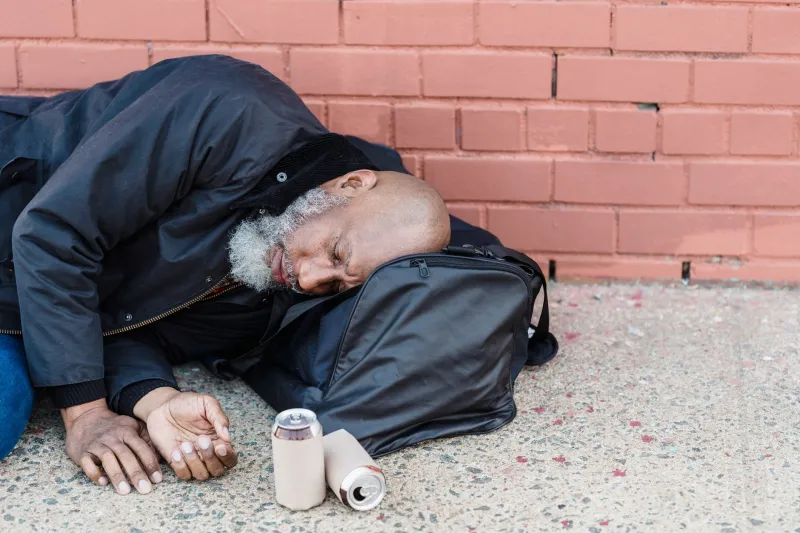
In city after city across the United States, a quiet legislative machinery has been set in motion—not to house the unhoused, but to fine them for being so. Camping bans, anti-loitering ordinances, prohibitions on sleeping in vehicles, restrictions on sitting on sidewalks: these statutes share a common function that is rarely stated plainly in the language of their enactment. They transform the condition of homelessness into a series of prosecutable offenses, and in doing so, they generate something municipalities have come to depend upon: revenue extracted from the people least equipped to pay it.
The consequences are not abstract. They accumulate in courtrooms, on credit reports, in the offices of landlords running background checks, and in the lives of hundreds of thousands of Americans for whom a single unpaid citation can permanently foreclose the possibility of stable housing.
Fined for Existing: The Scope of Anti-Homelessness Ordinances
The National Homelessness Law Center has documented more than 500 cities that maintain ordinances specifically targeting behaviors associated with homelessness. These laws prohibit activities that are, for people without shelter, unavoidable: sleeping outdoors, storing personal belongings in public, panhandling, and occupying space in parks or on sidewalks during overnight hours. Violations routinely carry fines ranging from $100 to $1,000 per citation. In jurisdictions with aggressive enforcement, an unhoused individual can accumulate thousands of dollars in legal debt within weeks.
What distinguishes this system from ordinary civil fines is its structural impossibility. A person experiencing homelessness who cannot pay a $250 camping citation faces a cascade of escalating consequences: late fees compound the original penalty, failure-to-appear warrants are issued when individuals miss court dates they were never reliably notified of, and misdemeanor charges convert civil debt into criminal records. That criminal record then becomes the primary barrier to securing housing, since the overwhelming majority of landlords and subsidized housing programs conduct background screenings and disqualify applicants with recent criminal history.
The system, in other words, is not designed to solve homelessness. It is designed to manage its visibility—and to extract resources from people who have none.
A Racial Architecture of Enforcement
The demographics of who bears the weight of this enforcement are not incidental. Research consistently demonstrates that Black Americans are dramatically overrepresented among the unhoused population relative to their share of the general population—comprising roughly 13 percent of the national population while accounting for approximately 37 percent of people experiencing homelessness, according to federal point-in-time count data. Latino and Indigenous communities similarly face disproportionate rates of housing instability rooted in decades of discriminatory housing policy, wage suppression, and the systematic exclusion from wealth-building instruments that defined mid-twentieth century American prosperity.
When police departments concentrate anti-homelessness enforcement in encampments and public spaces where Black and Latino unhoused individuals are most visible, the racial skew of citation issuance mirrors and magnifies these structural inequities. Civil rights attorneys in Los Angeles, Houston, Denver, and Phoenix have documented enforcement patterns in which predominantly white encampments near residential neighborhoods receive outreach services while predominantly Black encampments in commercial corridors receive sweeps, citations, and arrests.
The result is that the legal debt apparatus of anti-homelessness enforcement functions as a racial wealth extraction mechanism—one that is rarely analyzed through that frame but that operates with the consistency of design.
Municipal Revenue and the Incentive to Perpetuate
Perhaps the most troubling dimension of this system is the financial incentive it creates for municipalities to sustain rather than resolve homelessness. When citations generate revenue—even modest amounts, given the low collection rates from people without income—they create a budgetary logic that runs directly counter to the stated goal of reducing homelessness. Cities that have come to depend on fine revenue from quality-of-life enforcement face a structural disincentive to invest in the upstream housing and mental health interventions that would actually decrease the unhoused population.
This dynamic is not hypothetical. Investigative reporting in several major cities has revealed that law enforcement agencies justify anti-homelessness unit funding in part through citation metrics—a practice that replicates the perverse incentive structures exposed in Ferguson, Missouri, where the Department of Justice found that municipal courts had been systematically weaponized to generate revenue from low-income Black residents. The underlying logic is the same: treat poverty as a prosecutable condition, and the courts become a collection mechanism.
What makes the homelessness context particularly acute is the near-total absence of ability to pay. Collection rates on fines issued to unhoused individuals typically hover in the single digits. The fines are not being collected—they are being accumulated as legal debt that permanently stigmatizes the individuals who carry it.
The Rehousing Barrier No One Talks About
Housing advocates and case managers working with chronically unhoused individuals consistently identify outstanding fines and criminal records as among the most intractable barriers to permanent rehousing. Federal public housing regulations bar individuals with certain criminal convictions. Private landlords using screening services disqualify applicants with misdemeanor records regardless of the nature of the offense. Employment background checks that surface criminal history reduce access to the income necessary to sustain a lease.
The cruelest irony of the citation trap is that it is most devastating precisely for those who have managed, through sustained effort, to reach the threshold of potential housing stability. A person who has secured a housing voucher, found a willing landlord, and completed an application may be disqualified at the final stage because of a camping citation that became a failure-to-appear warrant that became a misdemeanor conviction—all stemming from the act of sleeping outdoors while waiting for the housing system to catch up to their need.
Organizations like the Texas Homeless Network, the National Homelessness Law Center, and local legal aid providers have begun pursuing citation relief and record expungement as explicit housing stabilization strategies. Several jurisdictions have implemented fine waiver programs for individuals who can demonstrate housing instability. These are meaningful interventions, but they address symptoms rather than the underlying architecture of criminalization.
What Fairness Actually Requires
The pathway toward a just response begins with a clear-eyed acknowledgment that homelessness is a housing crisis, not a behavioral or moral failure requiring legal sanction. The evidence base for this position is overwhelming: Housing First programs—which provide permanent housing without preconditions—consistently demonstrate superior outcomes on housing retention, cost-effectiveness, and health metrics compared to criminalization-based approaches.
Fairness requires that municipalities repeal ordinances that criminalize unavoidable behaviors associated with homelessness. It requires the elimination of outstanding fines and fees levied against unhoused individuals. It requires the expungement of criminal records generated through quality-of-life enforcement. And it requires a fundamental reallocation of the public resources currently spent on enforcement toward the housing, mental health, and substance use treatment infrastructure that addresses the actual drivers of homelessness.
Until cities are willing to make that shift—to stop billing people for their own poverty—the citation trap will continue to function exactly as it was built to function: not as a pathway out of homelessness, but as a mechanism for making it permanent.